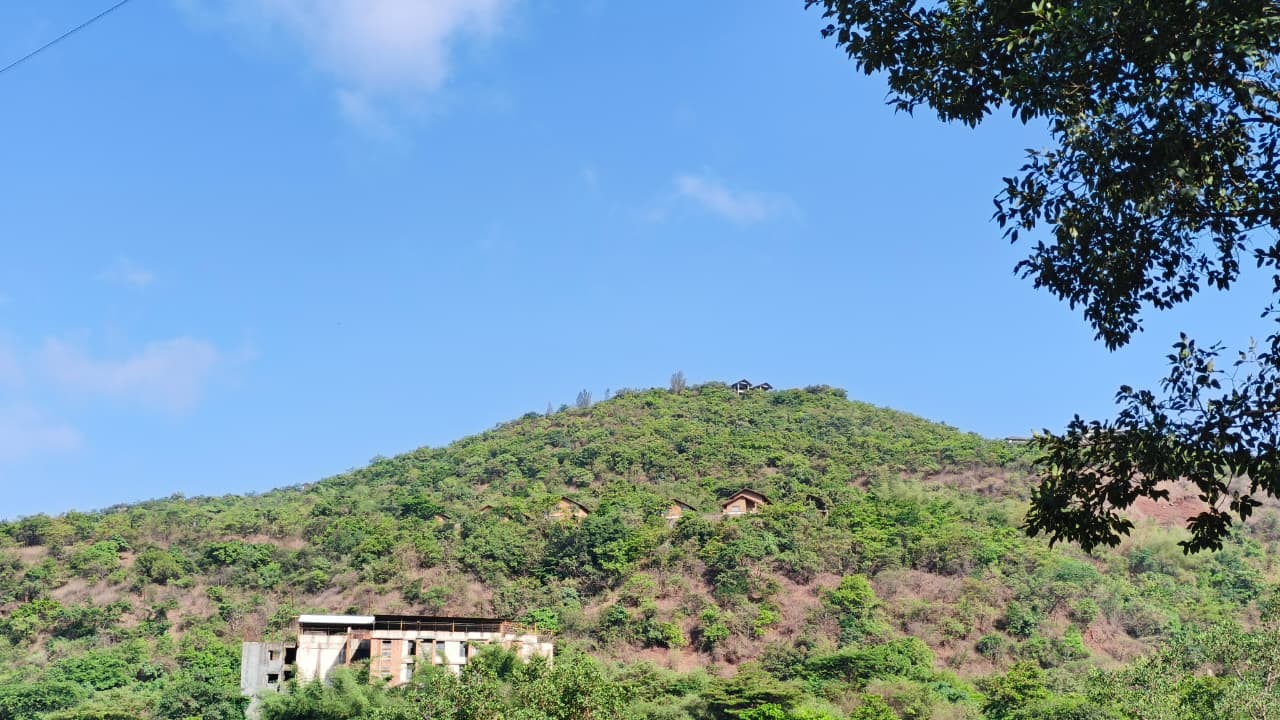
Lavasa, planned to be independent India’s first private hill city, was originally a zone designated for biological conservation and afforestation. Lavasa began as a mountainous area which planners later designed to mimic the Italian village of Portofino. However, the project failed and became a ghost town owing to legal and environmental hurdles. This space amidst the hilly terrains of the Sahyadri range of the Western Ghats was initially planned as a unit of five townships but now lays barren, abandoned and sparsely populated. With claims to be India’s most sustainable city, Lavasa was aimed to be developed into a hub of self-sustenance, with its own amenities including schools, hospitals, IT parks, colleges, restaurants, hotels, markets and business infrastructures.
Ajit Gulabchand, head of the Hindustan Construction Company [HCC], conceived the idea of the planned city of Lavasa which would be designed, built, and governed by the same company, allowing for economic success and a pleasant space for living at the same time. The Government of Maharashtra passed a series of acts that waived land-ceiling and provided stakeholders with substantial tax exemptions in certain hilly regions, allowing Gulabchand to take action towards developing his city of Lavasa. The government further gave the provision of Special Planning Authority [SPA] to this site, which enabled private enterprises deemed fit by the State Government to govern the area. The HCC now set up Lavasa Corporation Limited [LCL] solely for the planning, construction, management and governance of Lavasa. The architectural plan of the city was laid out by Hellmuth, Obata + Kassabaum [HOK], a global design, architecture, engineering and planning firm, winning prestigious international awards for architecture from the Congress of New Urbanism [CNU] and the American Society of Landscape Architects [ASLA]. Scot Wrighton, a management consultant who managed several cities in the USA, was hired as the city manager. In order to attract residents and further investments, Lavasa partnered with several institutions including Ecole Hôtelière de Lausanne, Christ University, Ashiana Senior Living, Girls’ Day School Trust, University of Oxford, Apollo Hospitals Group, and Manchester City Football Club.
However, amidst this myriad of projects, any further progress was forcefully stalled by the Indian Ministry of Environment and Forests [MoEF] in 2010 on the grounds of violating environmental laws and policies. There also emerged claims of wrongfully acquiring land at unfair prices by coercing local tribals. This lack of transparency caused disturbance and suspicion among the investors. The involvement of Supriya Sule, daughter of Ajit Pawar, in the planning of Lavasa as a shareholder led to a massive controversy on the alleged corruption and illegal permissions given for the building of the city. By the time the government allowed construction to restart, most investors had pulled out and LCL was facing a tough time navigating enormous debt and strict compliance to regulations. Raj Infrastructure Development India filed a bankruptcy petition against LCL for failing to make due payments. This petition was admitted in 2018, eventually leading to a halt in Lavasa’s developmental activities.
Years later, in 2023, the National Company Law Tribunal [NCLT] approved a resolution plan for Lavasa put forward by Darwin Platform Infrastructure Ltd [DPIL]. However, the city saw no development for over a year, again creating distrust amongst the investors. The resolution plan was scrapped in late 2024, leading Lavasa back to its lack of growth.
At present, Lavasa remains a partially constructed city with a sparse population mostly consisting of migrant students and senior citizens. Luxury infrastructures appear abandoned and dull, businesses struggle to survive and lands remain bare in what was supposed to be an international playground for the elite. Lavasa now longs for a saviour that will build it up to at least a fraction of its potential.
Lavasa, though admittedly facing financial constraints, remains a picturesque landscape, often dubbed “the Italy of India.” It’s lush green hills, stunning waterfront, themed buildings and pleasant weather make it a favourable destination for nature lovers. It’s sparse population and calming environment serves as a boon to those who enjoy solitude and seclusion. Residents from nearby metropolitan cities including Pune and Mumbai often visit Lavasa as a retreat from the busy crowds and fast-paced nature of their daily lives. Lavasa provides a truly European experience for much cheaper rates. Attractions like the Varasgaon Dam and the Dasave Viewpoint provide scenic spots for tourists to enjoy. Even the partially developed and abandoned structures possess a kind of quaint beauty as it contrasts with the bounty of nature around. Located in the biodiversity hotspot of Western Ghats, Lavasa is home to a large number of endemic species, both flora and fauna. It is also home to sacred groves including Kadtai Devrai at Dasave, which has been completely degraded as of the present.
Lavasa is a traditionally tribal region housing marginalised communities like the Dhangars, Katkars, and Adivasis from the villages of Mugaon, Dasave, Bombatmal, Dudhwan and others. The population largely remains tied to natural roots and traditions. They coexist peacefully with the wildlife and plants of the area, making sure that no harm is caused through their actions. These communities practise waste management and conserve natural resources like water, living with nature rather than against it. Though the Lavasa Corporation Limited [LCL] asserts that all land for their project was acquired legally with the permission of their owners, many members from these communities claim that their land was sold without their knowledge. Many villagers have taken their cases to the court to protest against this unfair acquisition of land. Other members welcome the project of Lavasa as they believe it will generate jobs, increase connectivity and benefit businesses in the area. At present, a small part of the tribal population has been hired by the few institutions that have been set up and other run their own business. However, most villagers remain stuck in poverty, availing none of the benefits they were promised.
REFERENCES
- theprint.in
- free-cities.org
- http://www.opendemocracy.net
- Tourism Urbanisation in Metropolitan Fringe: Insights from the Tourist City of Lavasa in Pune, India by Anubandh Hambarde and Kiran Shinde
- http://www.hok.com
- http://www.constructionweekonline.in
- timesofindia.indiatimes.com
- scroll.in
- ecologise.in
- The Private City: Planning, Property, and Protest in the Making of Lavasa New Town, India by Anokhi Parikh
- Rapid Assessment of Sacred Groves: A Biodiversity Assessment Tool for Ground Level Practitioners by Shivam Trivedi, Erach Bharucha and Rahul Mungikar

